Architectural Abstraction: Material as Subject
Wax, stone and glass in the tradition of brutalism and Finish Fetish
What is architectural abstraction?
Architectural abstraction is art that uses the language of building, such as slab, column, joint and surface, without depicting a building. It draws on brutalism, raw material honesty and 1960s California Finish Fetish.
See Architectural Abstract & Constructivism in the gallery →
Architectural abstraction takes the language of building, slab, column, joint and surface, and removes the building. What is left is material and structure: weight, edge and the way light lands on them.
Historical Context & Origins
The term brutalism comes from béton brut, the raw concrete of Le Corbusier's postwar buildings. Reyner Banham's 1966 book The New Brutalism: Ethic or Aesthetic? gave the movement its critical definition, treating honesty about materials as both a moral and a visual position. In painting, Nicolas de Staël built thick, slab-like blocks of colour with a palette knife in the early 1950s, and in California in the 1960s the Finish Fetish artists, including Larry Bell, worked with glass and industrial coatings.
Symbolism, Myth, & Iconography
These works carry the idea of structure and the tension between mass and balance. Encaustic, hot wax mixed with pigment, is among the oldest painting techniques: the Roman-era Fayum mummy portraits of Egypt are painted in it, and Jasper Johns revived it for his flag paintings in the 1950s.
Morphology & Aesthetic Evaluation
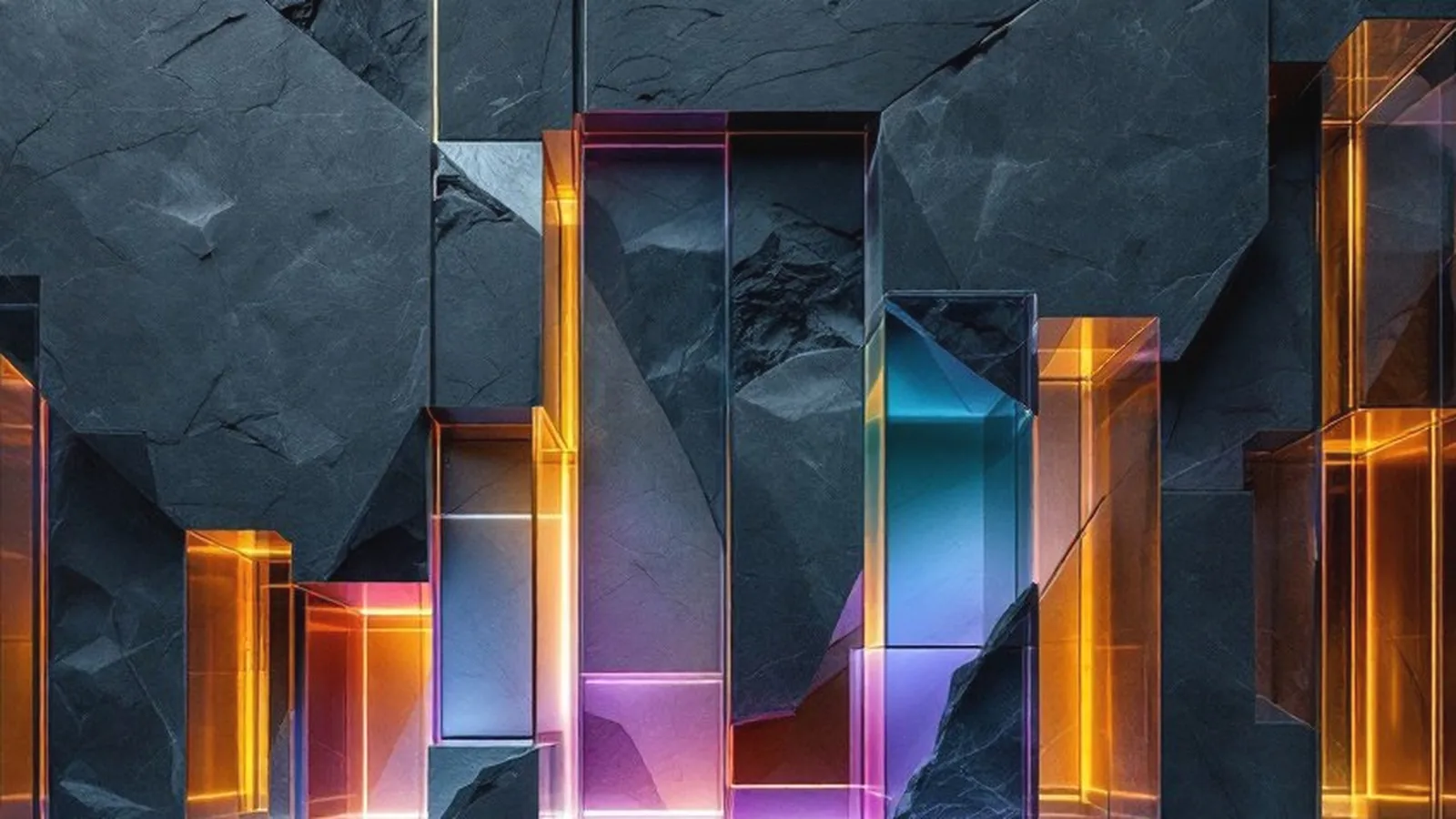
The surfaces are built from a limited set of materials. Encaustic holds colour in a layer that can be scraped and re-melted, giving soft translucent depth. Basalt is dense, dark volcanic rock that forms columns as it cools. Dichroic glass is coated with thin films that reflect one colour and transmit another, so the colour changes with the angle of view.
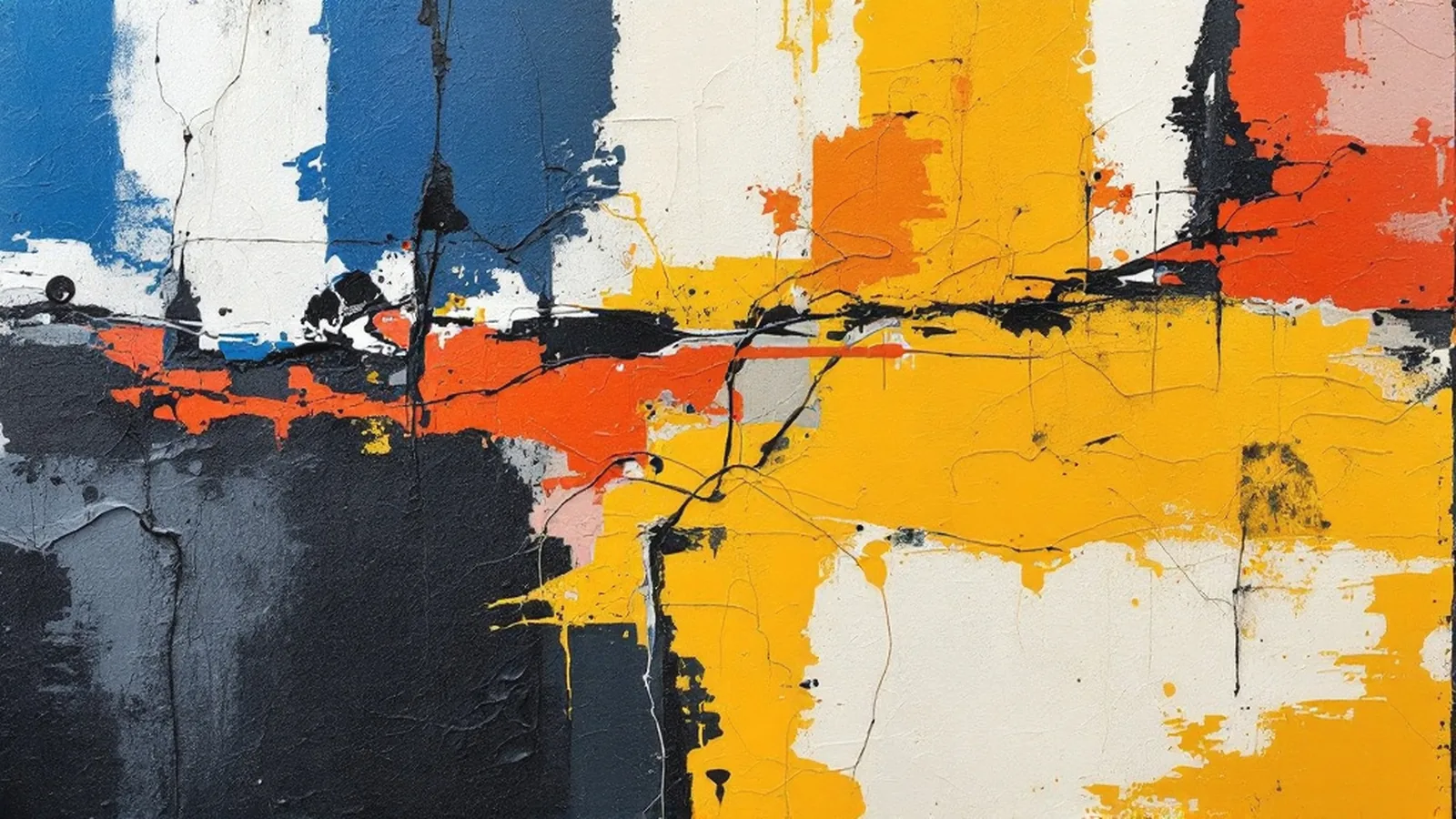
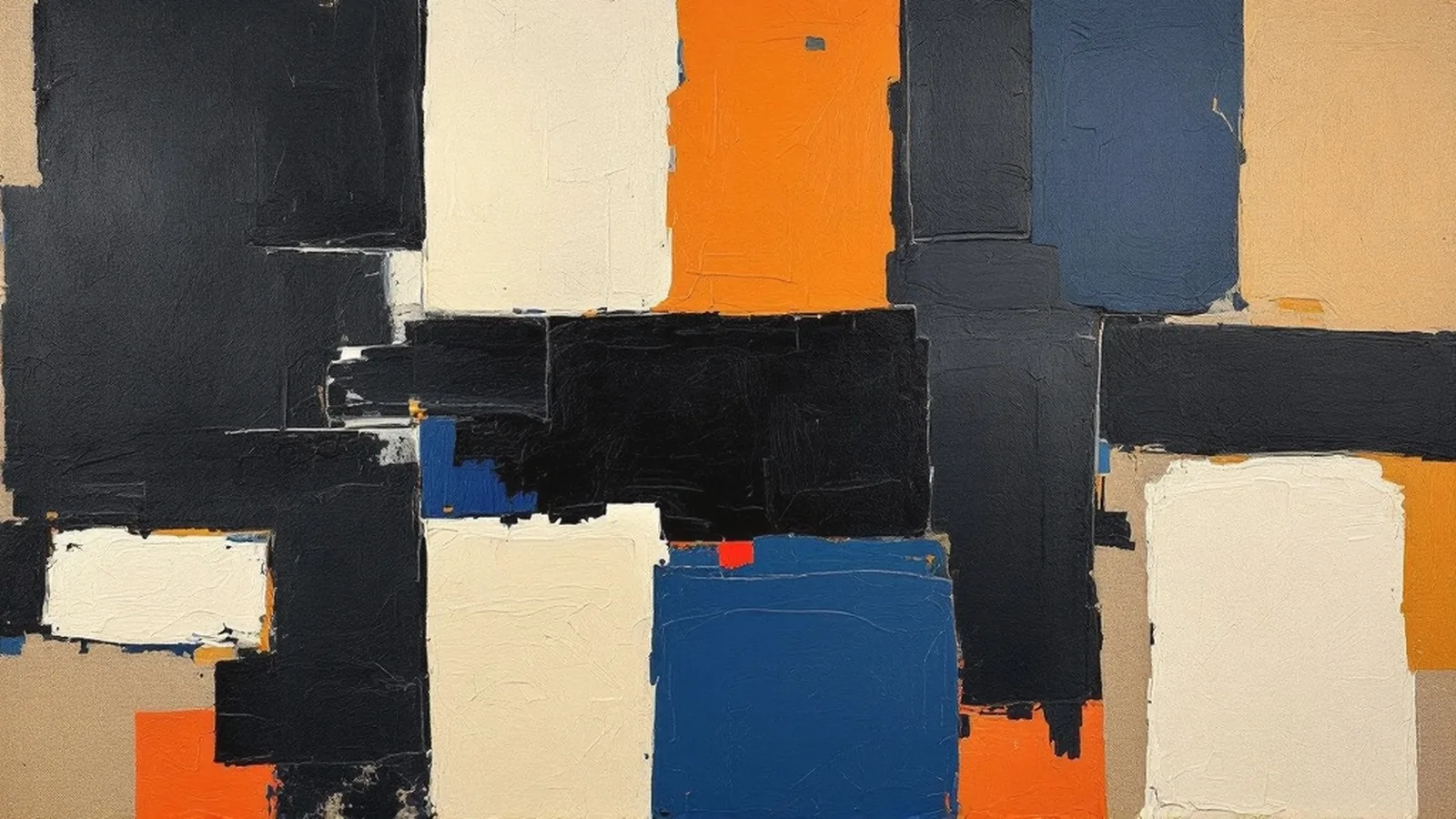
The three Cladeset works under this subject each take a different material: wax relief, chiselled basalt with dichroic prisms, and mason slabs in Prussian blue and cadmium. All are meant for raking light, where the surface comes forward.
Bibliographic Citations & Reference Material:
- •Banham, R. (1966). The New Brutalism: Ethic or Aesthetic? Architectural Press, London.
- •Mayer, R., & Sheehan, S. (1991). The Artist's Handbook of Materials and Techniques (5th ed.). Viking, New York.