Artistic Style Lineages
Every style in Cladeset is an independent, configurable visual doctrine with its own material physics, lighting rules, and production criteria.
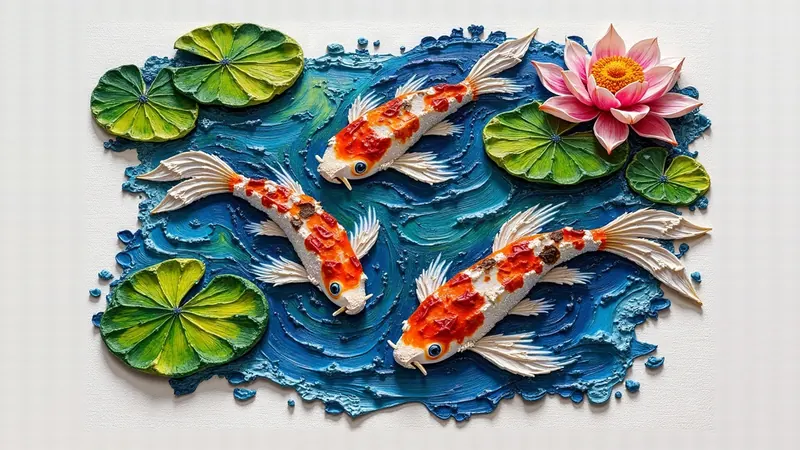
Impasto & Wax
Impasto & Wax rejects digital flatness. Every brushstroke preserves the kinetic momentum of wet paint, reflecting specular ceiling illumination and casting tactile perimeter shadows that fool the eye into feeling wet pigment on flat screens.
- •Physical inspiration: heavy-body linseed oil pigments on coarse-primed Belgian linen
- •Digital rendering: dimensional paint displacement with sculptural knife-crest shadows
- •Surface behavior: directional impasto ridges with natural specular oil gloss
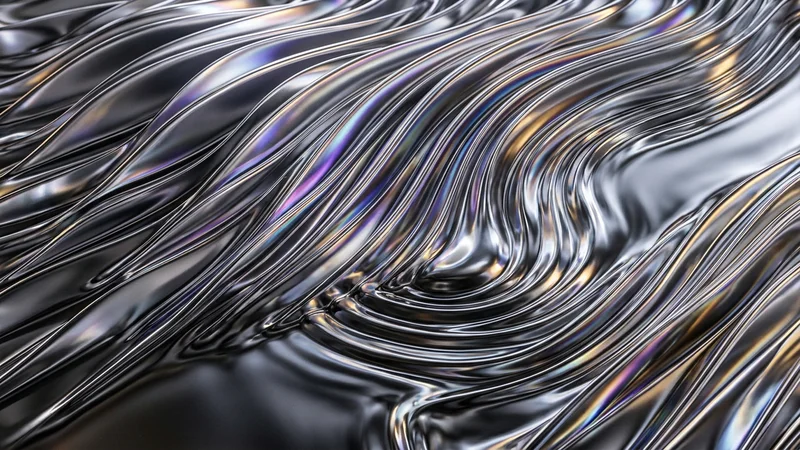
Liquid Iridescence
A digital material study inspired by thin-film light interference. Organic and mechanical subjects are rendered with specular fluid chrome reflections, where sweeping contours translate light into prismatic gradients of violet, electric cyan, and warm metallic amber.
- •Physical inspiration: specular liquid alloys and thin-film titanium interference
- •Digital rendering: dynamic reflection mapping with curvature-driven spectral caustics
- •Surface behavior: frictionless fluid curvature and high-contrast specular response
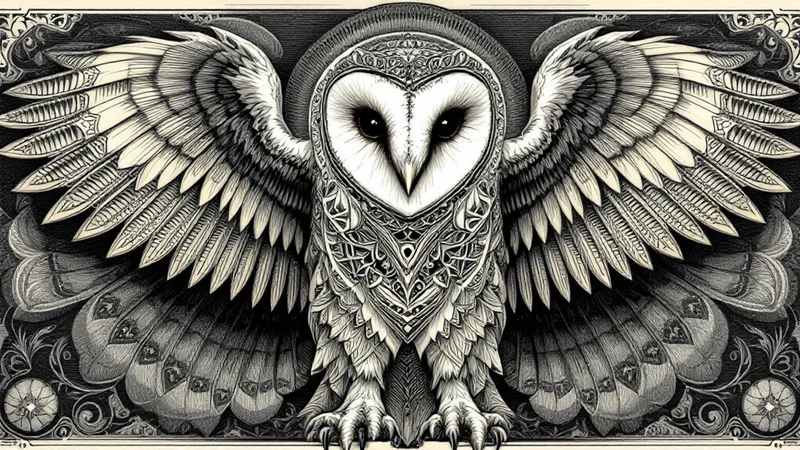
Guilloché Engraving
The pinnacle of algorithmic craft. Subjects are translated purely into thousands of uninterrupted, micro-variable vector curves. Depth and volume are rendered solely through line frequency, amplitude, and line weight modulation.
- •Physical inspiration: 19th-century banknote currency engraving and rose-engine lathe guilloché
- •Digital rendering: micro-variable continuous mathematical vector line paths
- •Surface behavior: high-frequency intaglio line density simulating hand-inked plate impressions
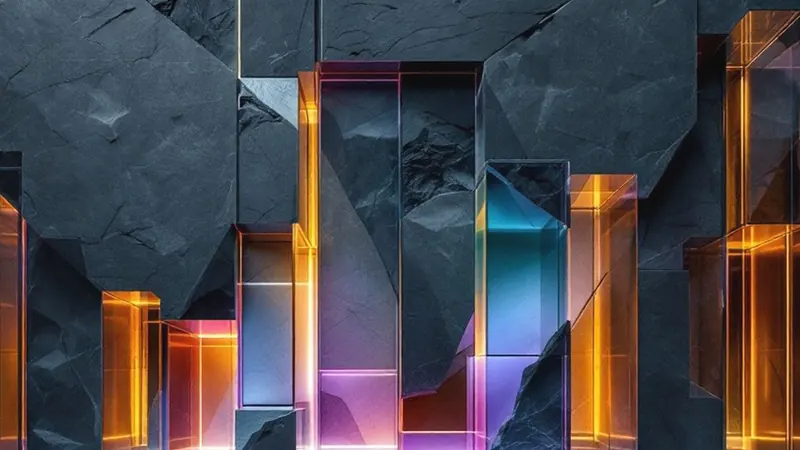
Prismatic Crystal
A digital material interpretation inspired by faceted optical quartz, calcite crystals, and chiseled volcanic basalt. Light penetrates the subject, splits into component spectral wavelengths, and refracts internally through geometric planar facets.
- •Physical inspiration: natural optical quartz, crystalline calcite, and chiseled dark basalt
- •Digital rendering: internal volumetric refraction and chromatic wavelength dispersion
- •Surface behavior: hand-cut lapidary facets with crisp specular edge highlights

Plaster & Stone
A sanctuary of quiet tactile minimalism. Keeping colour to a minimum, Plaster & Stone reveals the purest geometry of the subject through subtle gradations of white, cream, and warm stone shadows.
- •Physical inspiration: architectural bas-relief in chalk gypsum, slaked lime, marble and dark granite
- •Digital rendering: soft-diffuse micro-porous light scattering with deep undercut shadows
- •Surface behavior: monochromatic chalk matte texture with zero synthetic plastic gloss
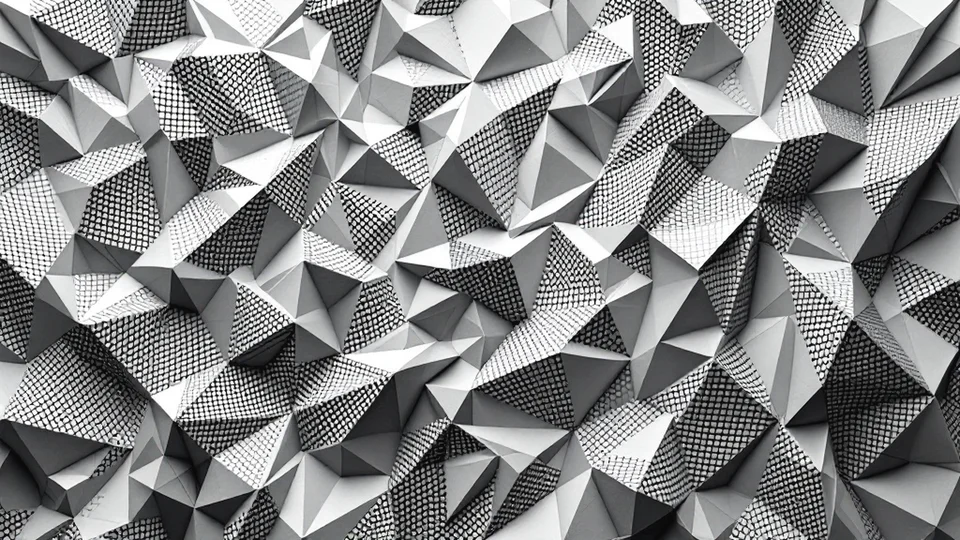
Paper & Fibre Relief
Paper & Fibre Relief treats the sheet as architecture. A printed or plain ground is scored, pleated and collapsed into a tessellation, and the image that results belongs as much to the raking light as to the paper: every facet takes a different tone, and the pattern shifts as the folds turn towards or away from the lamp.
- •Physical inspiration: hand-pressed long-fibre kozo and cotton rag paper with natural matte tooth
- •Digital rendering: geometric origami folding kinematics and directional raking planar shadows
- •Surface behavior: tactile paper fiber texture with clean unglued creased facets
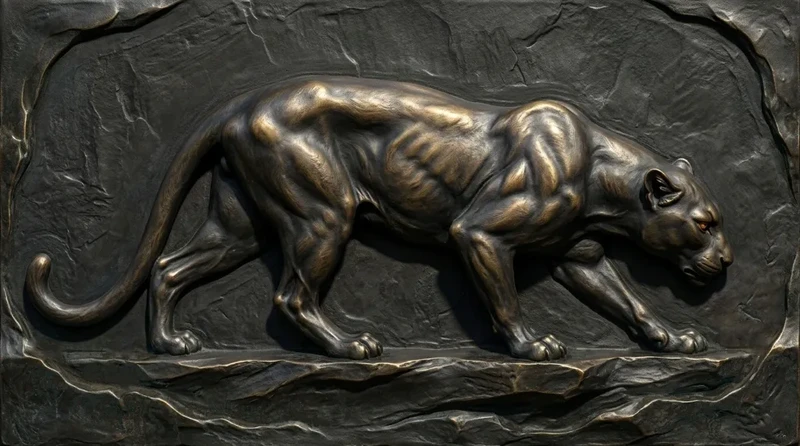
Cast Metal Relief
Cast Metal Relief follows the foundry tradition: a form is modelled, cast in metal and finished by hand. The surface carries the evidence of that process, chased edges, tool marks, a patina in the recesses and burnished highs, so the image reads as a wall panel with real weight and depth. The reference is the nineteenth-century animalier bronzes and modern architectural metalwork.
- •Physical inspiration: lost-wax cast bronze and cold-forged titanium
- •Digital rendering: metal shading with directional raking light and hand-finished tool marks
- •Surface behavior: satin or burnished metal with matte recesses, never mirror chrome