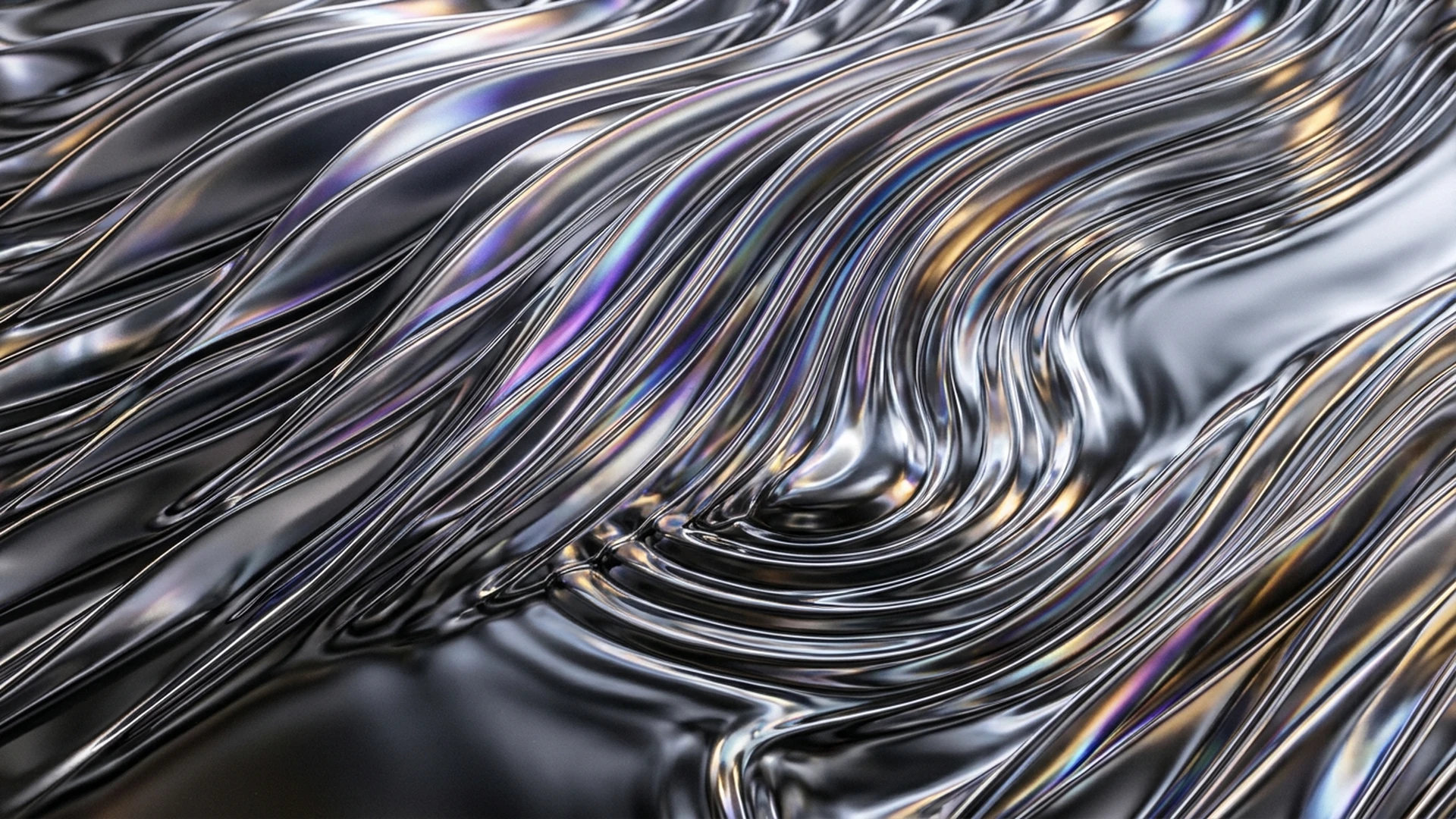
Fluid Chrome: Streamlines and Reflection
Laminar flow, the streamlined form, and the reflective surface in sculpture
What is fluid chrome art?
Fluid chrome art combines streamlined, flowing forms with mirror-like metal surfaces. Streamlining entered design in the 1930s, and the reflective chrome finish became widespread in the same period.
Fluid chrome combines two ideas: the smooth, ordered flow of a fluid around a form, and the mirror-like surface that reflects everything around it.
Historical Context & Origins
Streamlining entered design in the 1930s, when the shapes of aircraft and automobiles were smoothed to reduce drag, and the style carried into everyday objects. Chromium plating came into wide commercial use in the 1920s and became a signature finish of the period. In California in the 1960s, artists of the Finish Fetish movement made highly polished, industrial-finish objects of resin, glass and metal.
Symbolism, Myth, & Iconography
Chrome means speed, modernity and the machine. Fluid dynamics provides the scientific counterpart: in laminar flow, layers of fluid slide past each other without mixing, which is the smooth state that streamlining tries to preserve. George Batchelor's textbook is a standard reference for the underlying physics.
Morphology & Aesthetic Evaluation
A mirrored surface shows its form only through what it reflects, so curvature is read from the distortion of reflections. Long, smooth curves give long, smooth reflections, and an abrupt change shows as a break in the reflected image. Fins add direction and imply motion.
Liquid Chrome and Prismatic Fins is made for a matte display, where the reflections can show gradients of tone without clipping to pure white.
Bibliographic Citations & Reference Material:
- •Batchelor, G. K. (1967). An Introduction to Fluid Dynamics. Cambridge University Press.
- •Meikle, J. L. (1979). Twentieth Century Limited: Industrial Design in America, 1925-1939. Temple University Press, Philadelphia.