The Thoroughbred: Anatomy of Speed
From Stubbs to Muybridge, how painters learned to see a horse in motion
What is a Thoroughbred?
The Thoroughbred is a racehorse breed developed in England around 1700. All living Thoroughbreds trace their male line to three foundation stallions: the Byerley Turk, the Darley Arabian and the Godolphin Arabian.
The Thoroughbred is a breed built for speed. It is also one of the longest-running subjects in Western painting, and the history of horse painting is partly a history of learning how a horse actually moves.
Historical Context & Origins
All modern Thoroughbreds trace their male line to three foundation stallions imported to England around 1700: the Byerley Turk, the Darley Arabian and the Godolphin Arabian. George Stubbs published The Anatomy of the Horse in 1766 after years of dissection, and his paintings, such as Whistlejacket, set a standard of anatomical accuracy. In 1878 Eadweard Muybridge's sequence photographs showed that a galloping horse has all four feet off the ground at one point, settling a long argument and overturning the rocking-horse pose of earlier painting. Degas followed the racecourse for decades.
Symbolism, Myth, & Iconography
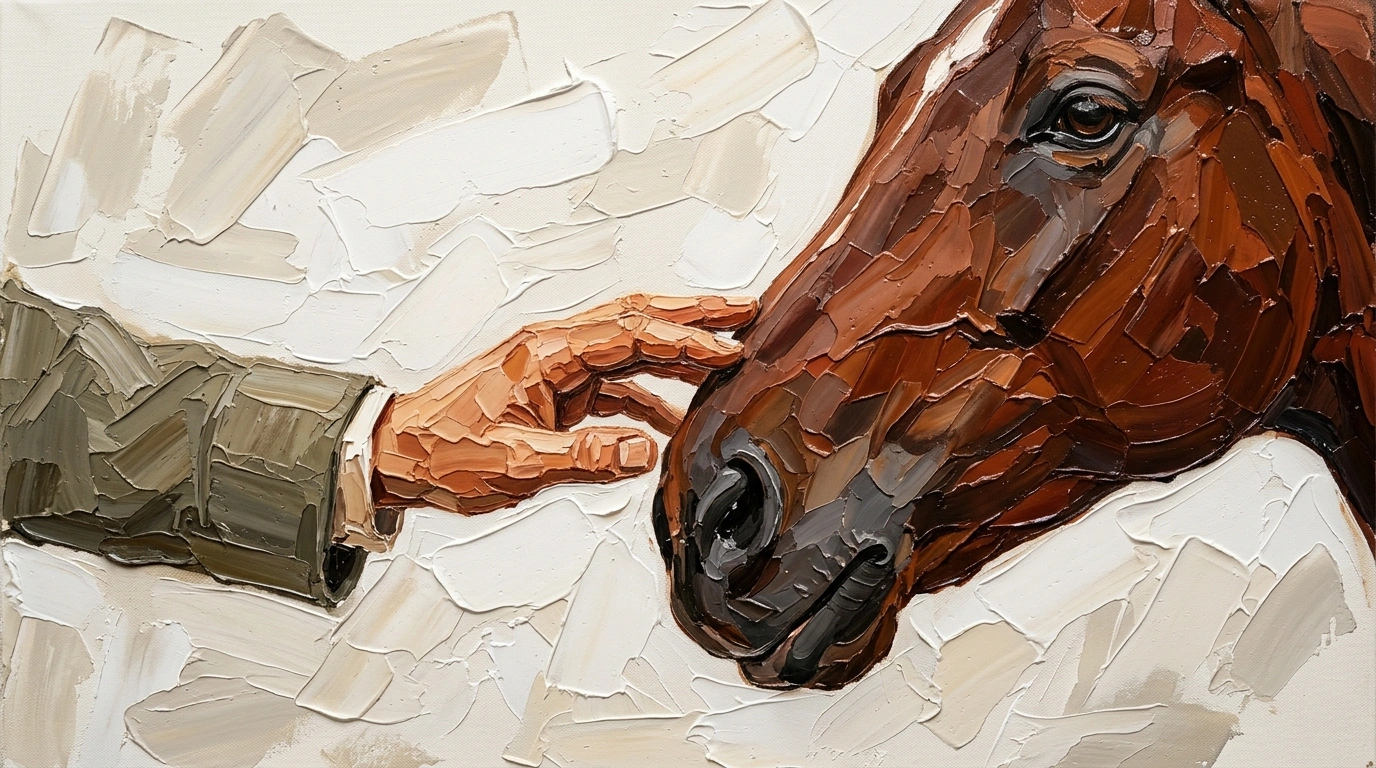
The horse stands for power under control, nobility, and the partnership of rider and animal. Xenophon's treatise On Horsemanship, written in the fourth century BC, already argues for gentleness over force, a view the quiet scene in The Horse Whisperer shares.
Morphology & Aesthetic Evaluation
The Thoroughbred is lean and long-legged, with a deep chest, a fine head and thin skin through which muscle and vein show. Painters have always found it a subject where the structure beneath the surface is visible.
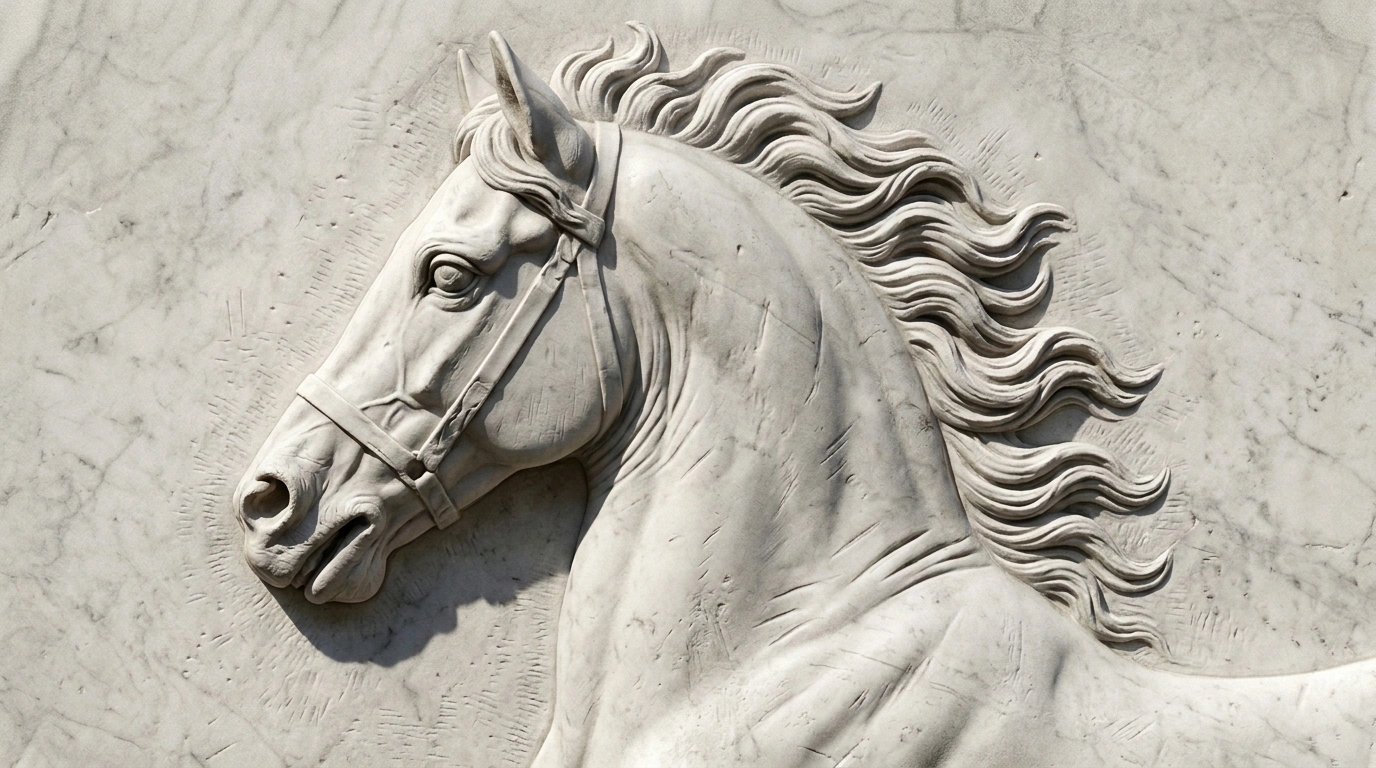
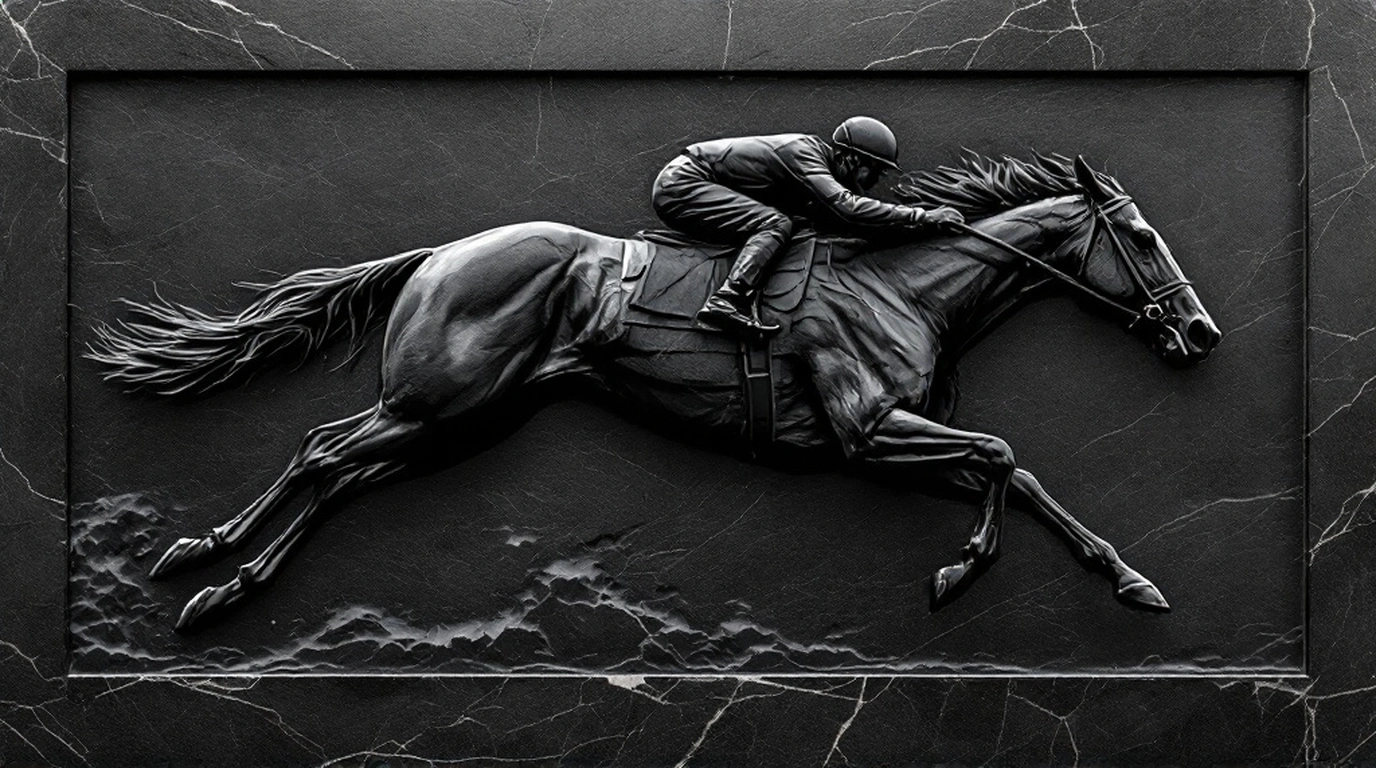
Cladeset shows the horse in three materials. The Parthenon Equus is carved in Carrara marble in the manner of the Parthenon friezes, the Derby Gallop is a full-stretch racehorse in dark basalt granite relief, and The Horse Whisperer, a muzzle touch, is painted in heavy impasto, where thick knife paint makes the muscle and mane stand from the surface.
Bibliographic Citations & Reference Material:
- •Stubbs, G. (1766). The Anatomy of the Horse. J. Purser, London.
- •Egerton, J. (2007). George Stubbs, Painter: Catalogue Raisonné. Yale University Press.
- •Muybridge, E. (1887). Animal Locomotion. University of Pennsylvania, Philadelphia.
- •Xenophon (c. 365 BC). On Horsemanship (Peri Hippikes).