Impasto & Wax
Ready$38
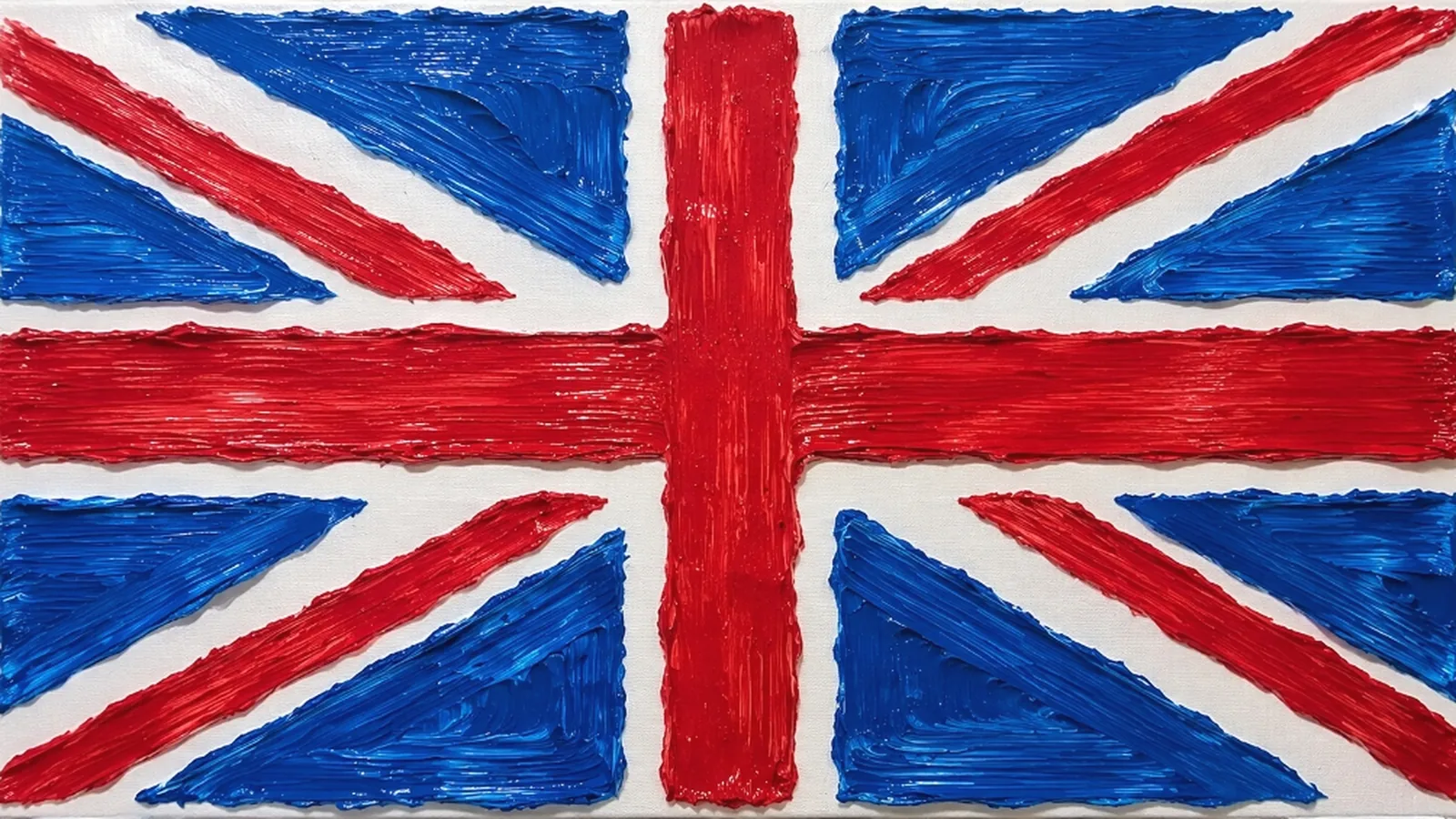
Union Jack in Sculpted Impasto Oil
Vermilion and ultramarine dragged across a white canvas ground in thick ridges, the weave left showing in the diagonals.
Three crosses laid over one another: St George for England, St Andrew for Scotland and St Patrick for Ireland.
First combined in 1606 after the union of the English and Scottish crowns and given its present form in 1801, the flag became one of the most reused graphic devices of the twentieth century, from naval ensigns to pop art and fashion.
Union of separate nations under one crown, expressed by overlaying their patron saints' crosses.
Experience the foundational premise: select any biological or mechanical subject and observe how its visual meaning transforms across divergent artistic treatments.
Impasto & Wax rejects digital flatness. Every brushstroke preserves the kinetic momentum of wet paint, reflecting specular ceiling illumination and casting tactile perimeter shadows that fool the eye into feeling wet pigment on flat screens.
Each piece reimagines this subject through a distinct material lineage.
Vermilion and ultramarine dragged across a white canvas ground in thick ridges, the weave left showing in the diagonals.
The Union Flag, often called the Union Jack, is made of three crosses laid over each other. It is a design about combination: each of the original kingdoms is represented by the cross of its patron sa...